Friday, May 10, 2013
Creative Component
I've practiced a little the level editor in Knytt Stories. I've mentioned before that there are online tutorials for its use, but I also decided to look at some of the other user generated content for comparison. In particular, content that seemed to have some key criticisms was especially useful. In the linked video, I noted that some of the risks in level creation might be setting the level up in such a way as to seem tedious. I thought about the risks there, and determined that it was less of a concern for a small level such as I was trying to make. I also took time tinkering with the software to see how the functions worked, which aspects were likely to cause problems, and how to test the level before exhibiting it.

Focus: Knytt Stories
I've decided to choose Knytt Stories as the focus of my final paper. As research, I have decided to learn more about the developer, his history with game development and some of the software he uses.
Nicklas Nygren, the creator, has done a few interviews talking about Knytt and Knytt Stories. On of the more informative seems to be for a French site (with english transcript) found here. He has done others as well, but they all more or less explain what he tries to accomplish in making his games, as well as what tools he uses and how he developed as an artist.
I looked into some video tutorials for the software he uses (Multimedia Fusion 2), but most explanations seem rather daunting. My exploration of process will likely focus on the specialized toolset he made for himself.
Nicklas Nygren, the creator, has done a few interviews talking about Knytt and Knytt Stories. On of the more informative seems to be for a French site (with english transcript) found here. He has done others as well, but they all more or less explain what he tries to accomplish in making his games, as well as what tools he uses and how he developed as an artist.
I looked into some video tutorials for the software he uses (Multimedia Fusion 2), but most explanations seem rather daunting. My exploration of process will likely focus on the specialized toolset he made for himself.
Thursday, May 9, 2013
Possibilities for Final Project
I am considering 3 possibilities for m final process detailing a work and the involved creative process.
Knytt Stories:

Knytt Stories is a game created by Nicklas Nygren. He has done interviews with some sites interested in indie games. There are numerous fan communities who have taken interest in this game recreationally, as well as those focused on the creation of fan content.
Freddie Wong:
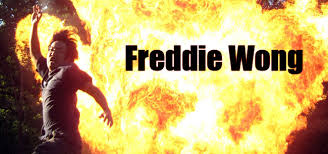
Freddie Wong is a video artist who makes videos on youtube. Alot of what he makes is heavy on the use of computer editing and special effects. He has an alternate channel that hosts behind the scenes videos and special effects for his main channel. His most high profile work is on a webseries called Video Game High School. His work related to this project is posted on Rocket Jump.
A Softer World:
 A Softer World is a web comic by Emily Horne and Joey Comeau. It takes photos and adds hypothetical dialogue. I am less familiar with background information on these individuals, and am only familiar with some of the things they do such as the photographs of Emily and the interview series done by Joey. I find the idea behind the comic interesting, but this would take more effort to research.
Knytt Stories:
Knytt Stories is a game created by Nicklas Nygren. He has done interviews with some sites interested in indie games. There are numerous fan communities who have taken interest in this game recreationally, as well as those focused on the creation of fan content.
Freddie Wong:

Freddie Wong is a video artist who makes videos on youtube. Alot of what he makes is heavy on the use of computer editing and special effects. He has an alternate channel that hosts behind the scenes videos and special effects for his main channel. His most high profile work is on a webseries called Video Game High School. His work related to this project is posted on Rocket Jump.
A Softer World:
Postmoderism - pastiche
Pastiche is a term used in the description of some postmodern art. It can be thought of as the borrowing or plagiarism of ideas and aesthetics in the use of contemporary works. The widespread adoption of "bullet-time" in movies after The Matrix would be an example. One interesting work I have come across that exemplifies this is a narrative called Sailor Nothing, by Stefan Gagne.

The story itself is a somewhat dark and paranormal work, but it is one that can not be fully appreciated without an understanding of where the story draws influence from. Sailor Nothing borrows narrative elements and premise from Sailor Moon, a popular anime from the early Nineties. The author acknowledges the existence of Sailor Moon on his website, but largely to clarify that he is not making a piece of fanfiction for the original series. Whereas the premise of Sailor Moon is used for the background of his work, he uses his own characters and setting to create a more serious and dark story.
The borrowing of the premise is very much in line with the idea of pastiche, and the influence is not directly credited in the work.
The story itself is a somewhat dark and paranormal work, but it is one that can not be fully appreciated without an understanding of where the story draws influence from. Sailor Nothing borrows narrative elements and premise from Sailor Moon, a popular anime from the early Nineties. The author acknowledges the existence of Sailor Moon on his website, but largely to clarify that he is not making a piece of fanfiction for the original series. Whereas the premise of Sailor Moon is used for the background of his work, he uses his own characters and setting to create a more serious and dark story.
The borrowing of the premise is very much in line with the idea of pastiche, and the influence is not directly credited in the work.
Wednesday, March 20, 2013
Culture Jamming

This is an image referencing the Barbie Liberation Organization. I had found it on the site Creative Tools 4 Critical Times. There, they describe it thusly:
The Barbie Liberation Organization's (B.L.O.) Barbie Liberation (1993) was an artistic prank in which the voice boxes of 300 talking Barbie and G.I. Joe dolls were switched. The modified dolls were then secretly returned to stores to be purchased by unsuspecting consumers. The B.L.O. was founded by Mike Bonanno of the Yes Men.GI Joes and Barbie dolls tend to be very gendered toys for children, and this is often reinforced by voice recordings that the dolls play. By switching the voiceboxes of the two dolls, you end up with toys that end up saying things that contrast very strongly with the gendered roles that are being portrayed by the appearance of the dolls. That dissonance can be a way to bring issues of gender performance into focus when they might otherwise go unnoticed and unquestioned.
Art Exhibition
There are a couple art exhibits I planned on seeing if I had the chance. The first I had been looking into was the fifth installment of the Peekskill Project. The event is essentially a long series of exhibitions by contemporary artists in the Hudson Valley, done in lots of different types of mediums in on and offsite venues. The event takes place from September to July on the second and third Sundays of the month. Due to the drive, this was not my first choice.
What ended up drawing my attention more was the Dia in Beacon.

What ended up drawing my attention more was the Dia in Beacon.
The Dia has a very spacious venue that hosts various exhibits. What I ended up eventually deciding on observing was the Sol LeWitt Drawing Series. It was a series of conceptual drawings done under the direction of Sol LeWitt. I visited the Dia after class on a Friday, as the Dia is open on weekends and Fridays.
Friday, February 15, 2013
Monday, February 4, 2013
Second Observation - Photographic Analysis

The studium in this instance would just be Ms. Clinton sitting in the assembly jotting down notes. For the site's purposes, however, the image can be construed to depict her as tired or exhausted. This serves to reinforce the article's initial narrative set-up, an example of selective an image for its punctum. Image selection can often be done for these purposes in political or editorial media.
Monday, January 28, 2013
First Observation - General Miaja's Militiamen Writing Letters

This is a photograph known as "General Miaja's Militiamen Writing Letters", taken in 1937. Upon first looking at the image, we notice that two men are in the process of writing. One of the gentleman is seemingly fully dressed, while the other is wearing what appears to be clothes for sleeping. Next to them is a large sack, with a bundle of papers which may well be envelopes. There seems to be a board for writing on, as they do not appear to be near any buildings or accommodations. They seem to be in a structure built from grass and sticks, with a rock at the entrance. Near them are some upright rifles and a loose helmet. Also of note is that the gentlemen appear to be Hispanic.
One can surmise from this photo that there is some type of conflict going on, just from seeing the rifles nearby and seemingly at the ready. The nature of their shelter also suggests that while they are currently at rest, they are most likely prepared for or already involved in some military engagement. The rifles and the black and white color scheme of the photo suggests that this is from some earlier point in history, and researching the history of the photograph and the name of general confirms this.
A search for the generals name provides a wikipedia page for José Miaja Menant, a commander during the time of the Spanish Civil War. According to the details page of the art exhibit, photographs such as this one were an important source of information about the war internationally. In fact, the time period of the Spanish Civil War saw the burgeoning of photojournalism.
The conflict was the subject of a BBC documentary video series available online. The first part is linked below:
Subscribe to:
Posts (Atom)